

A Mother, Two Kids, and a Library Card That Changed Us All
The Library Diaries — Week 01 | Carmel Clay Public Library, Carmel, Indiana
There is a ritual I have been practicing for years that costs absolutely nothing and has given me more than almost anything else I have ever invested in as a mother. Every week, I pack up and I go to the library. Sometimes I go alone, with a coffee and a quiet purpose. More often than not, I go with my kids. And every single time, without fail, something shifts. The noise of the week quiets. The to-do lists fade. And we remember, together, that the world is full of ideas worth sitting still for.
This week, Cohen and I made the drive to Carmel Clay Public Library on East Main Street in Carmel, Indiana, and I sat across from my teenager in that enormous, light-filled building, and I thought about how many versions of this moment I have already lived. A toddler waddling through the picture book section, pulling things off shelves with both hands. A grade schooler choosing chapter books with far too much confidence and absolutely no system. A teenager who still comes, still picks things up, still reads. I did not manufacture that love of reading. I did not force it or schedule it or curriculum-ize it. The library did that. Consistently showing up did that.
This is the first entry in what I am calling The Library Diaries, a weekly blog series about something I believe in deeply and do not hear mothers talk about nearly enough: the profound, lasting, completely free gift of raising your children in libraries.
Why the Library? Why Every Week?
I want to talk honestly about the why before I tell you about Carmel Clay, because I think the why is the thing that changes how you experience any library you walk into.
We live in a world that monetizes everything, including childhood. There are apps and subscription boxes and enrichment programs and curated reading lists and educational platforms, all of them promising to give your kids an edge, a head start, a better shot. I am not against any of those things. But I want to offer you the counterweight, which is this: the most intellectually rich, emotionally grounded, genuinely curious people I have known in my life were readers. And readers are not made by programs. They are made by access, by habit, by a parent who modeled what it looks like to choose a book over a screen on a Tuesday afternoon.
The library is free. Every week. For every book your child wants to hold, every audiobook they want to hear, every magazine they want to page through, every program they want to attend. The library asks nothing of you except that you show up and return what you borrowed. That transaction, that simplicity, is radical in 2026. And the value of what it gives back is immeasurable.
Both of my children were raised in libraries the way some kids are raised in church or on soccer fields. It was our place. It was where we talked without the distraction of home, where we slowed down without trying, where we let other people's words and ideas into our lives through the quietest possible door. You pick up a book someone else loved and you carry a little of them with you. Their perspective, their grief, their joy, their way of seeing. That is not a small thing. That is an enormous thing dressed in a very ordinary jacket.
Carmel Clay Public Library — Carmel, Indiana
Carmel Clay Public Library sits at 425 East Main Street in Carmel, Indiana, right at the edge of one of the most walkable, vibrant pockets of Central Indiana. If you have never been to Carmel, it is a city that takes its quality of life seriously. The Carmel Arts and Design District is a short walk west along Main Street, lined with galleries, sculpture installations, boutique shops, and restaurant patios that spill out onto the sidewalk in warm weather. The Monon Trail runs right through the heart of the city, connecting neighborhoods, parks, and green spaces in a way that makes you want to stay longer than you planned. It is genuinely one of the most livable, beautiful small cities in Indiana, and the library reflects that.
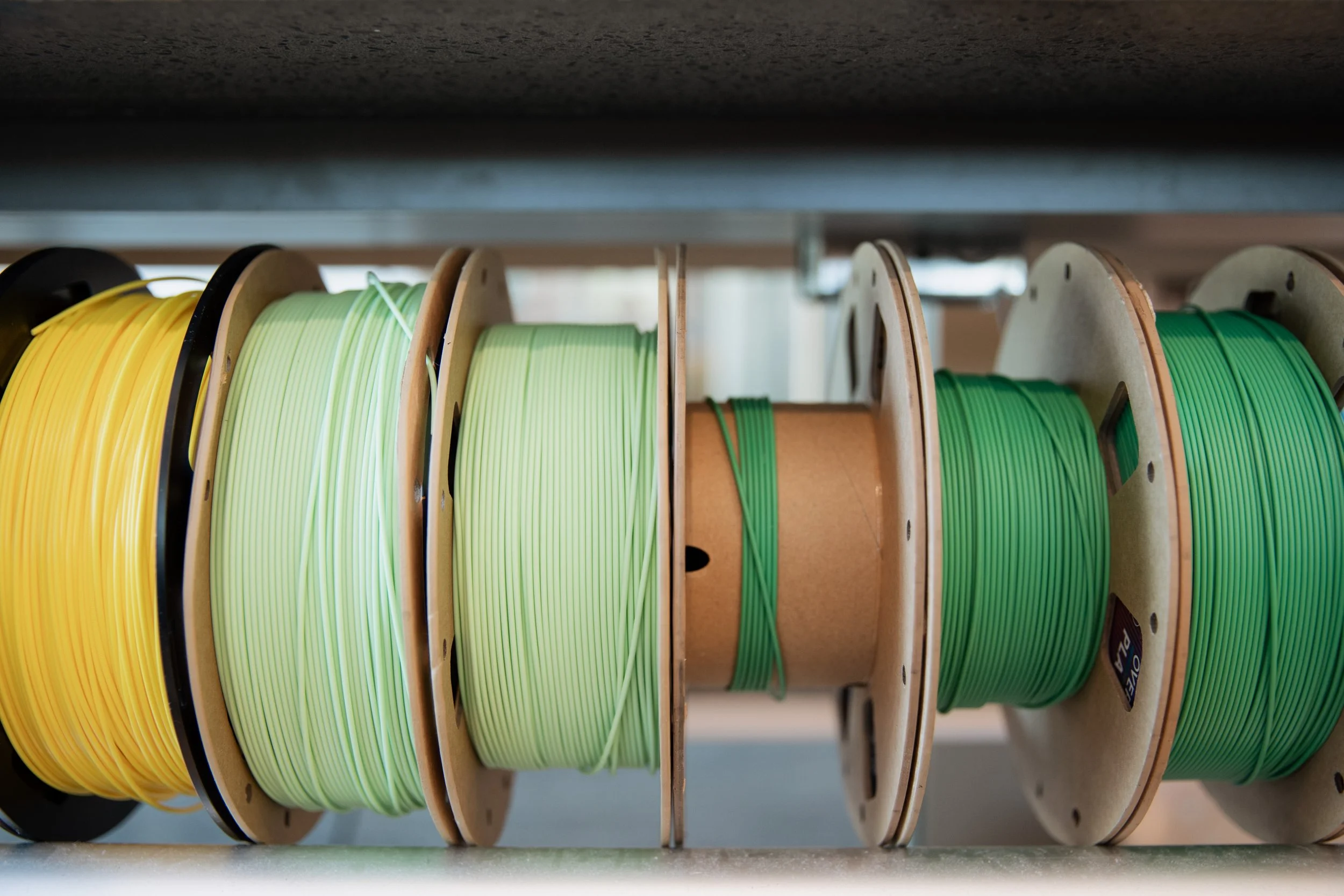
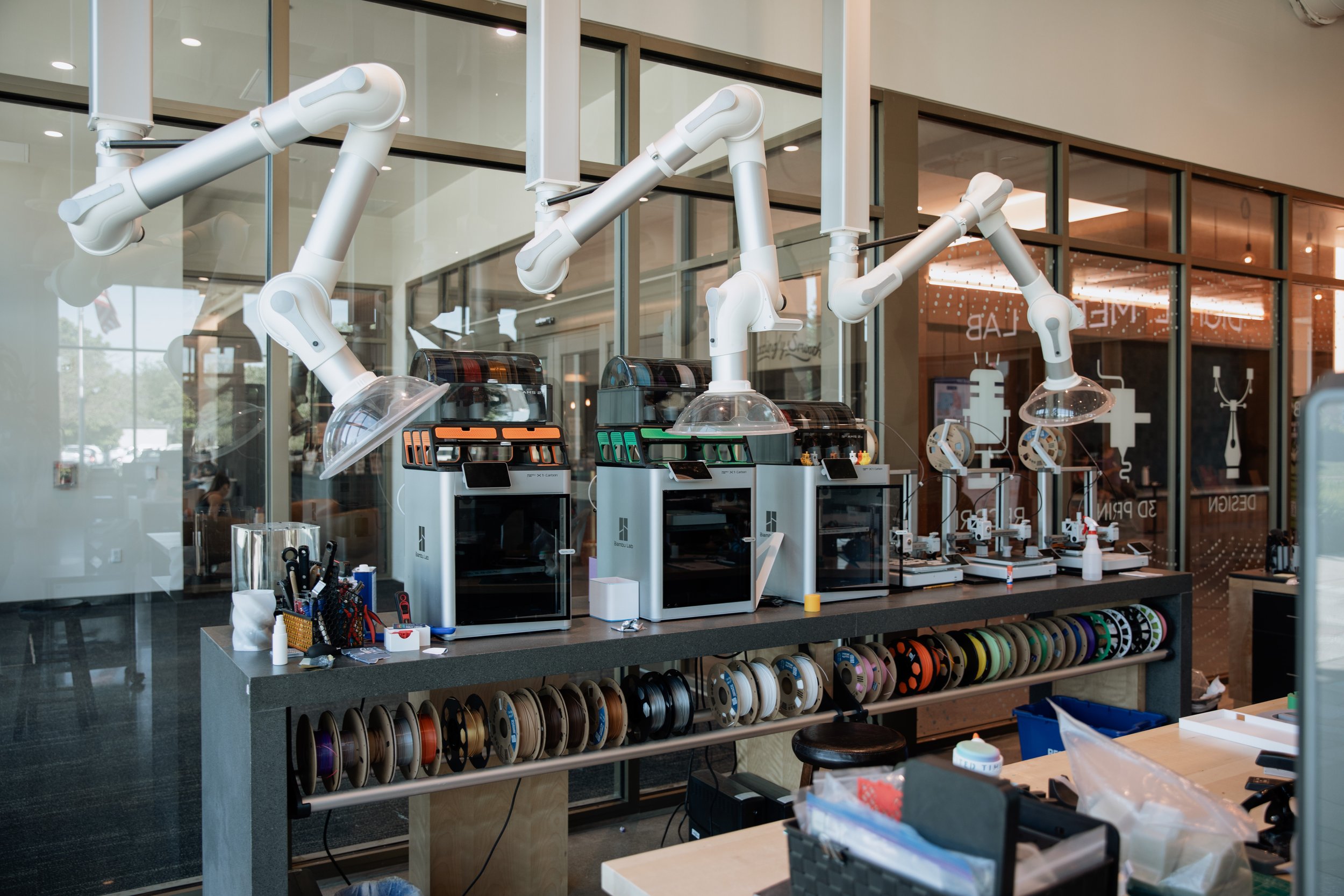
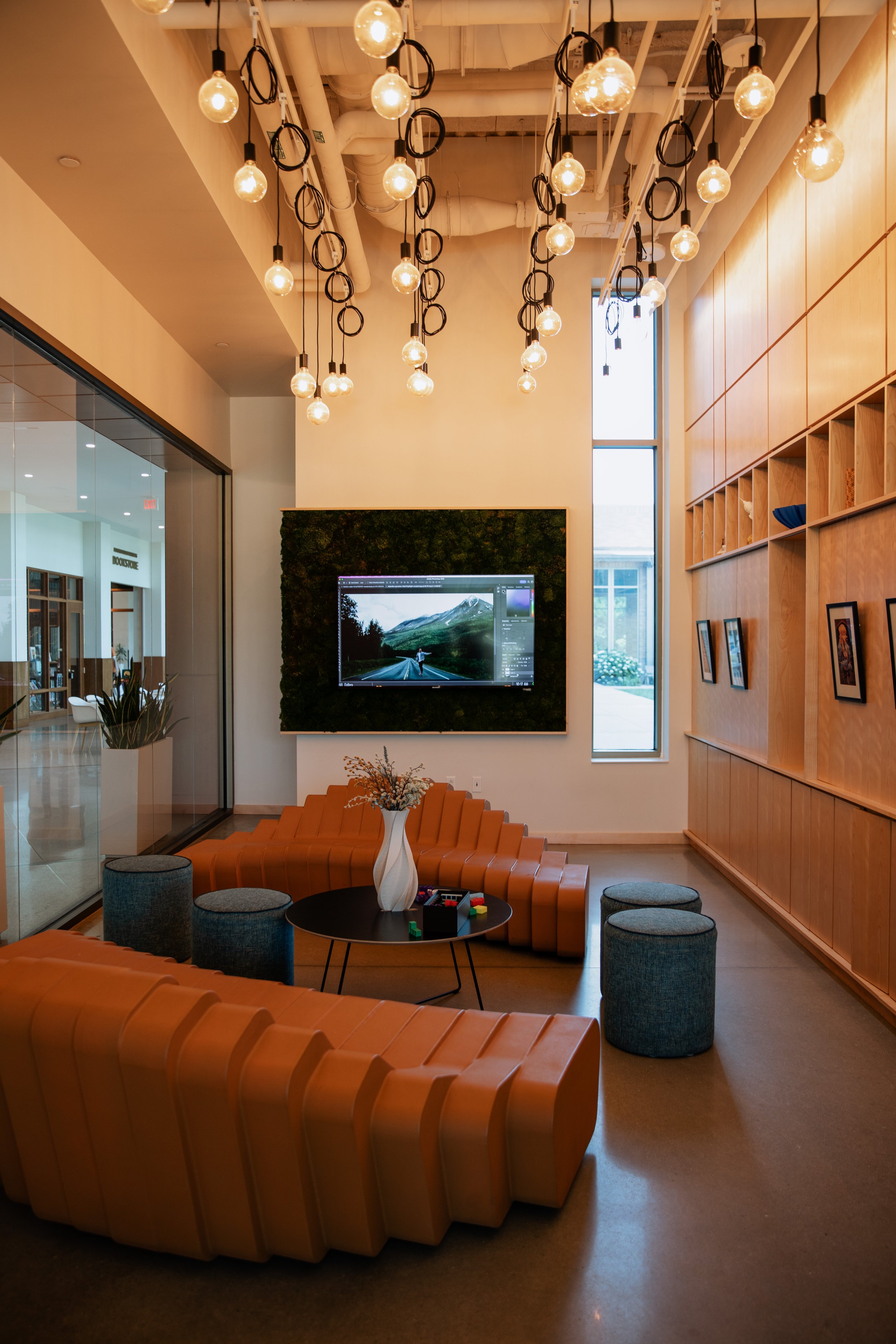
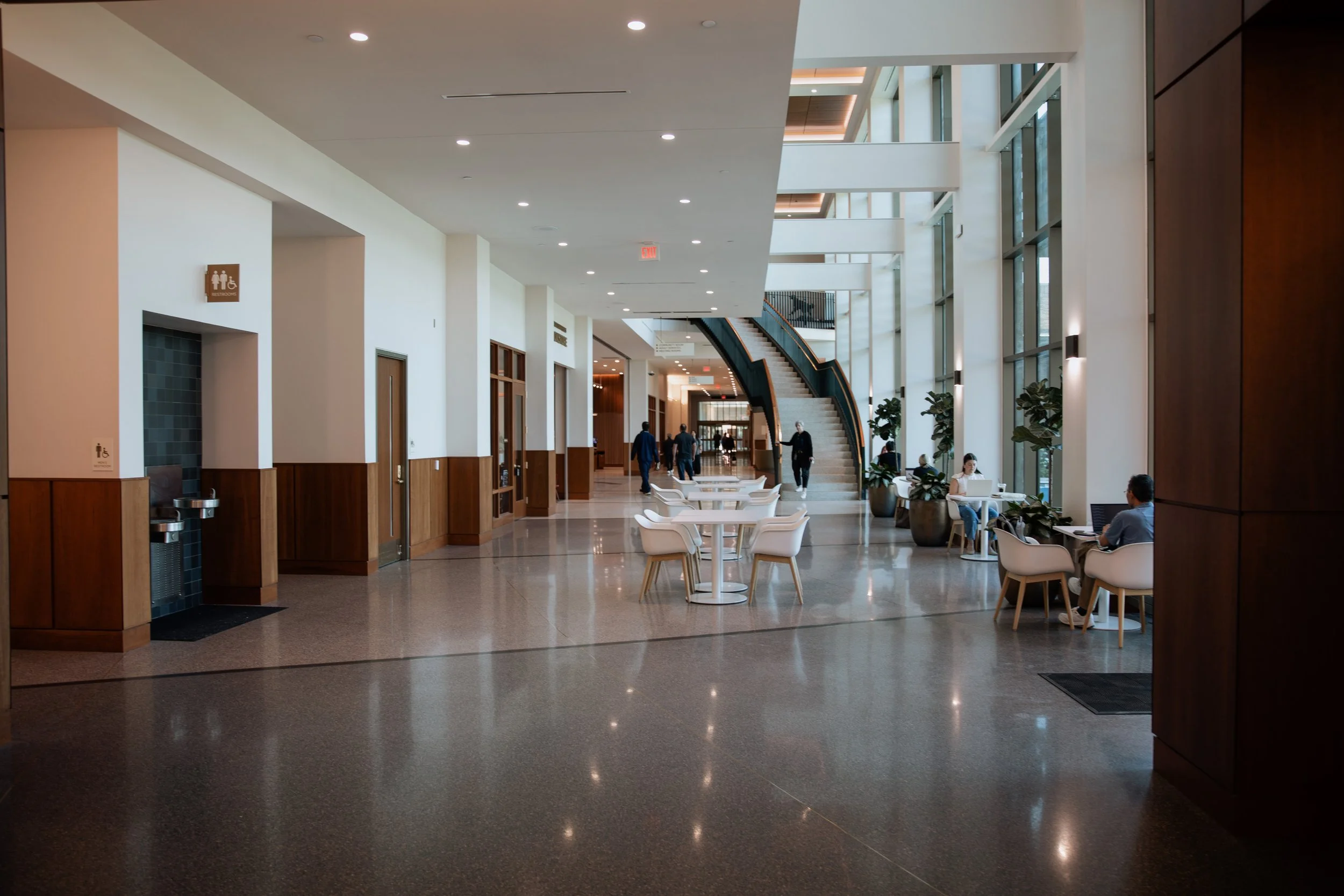
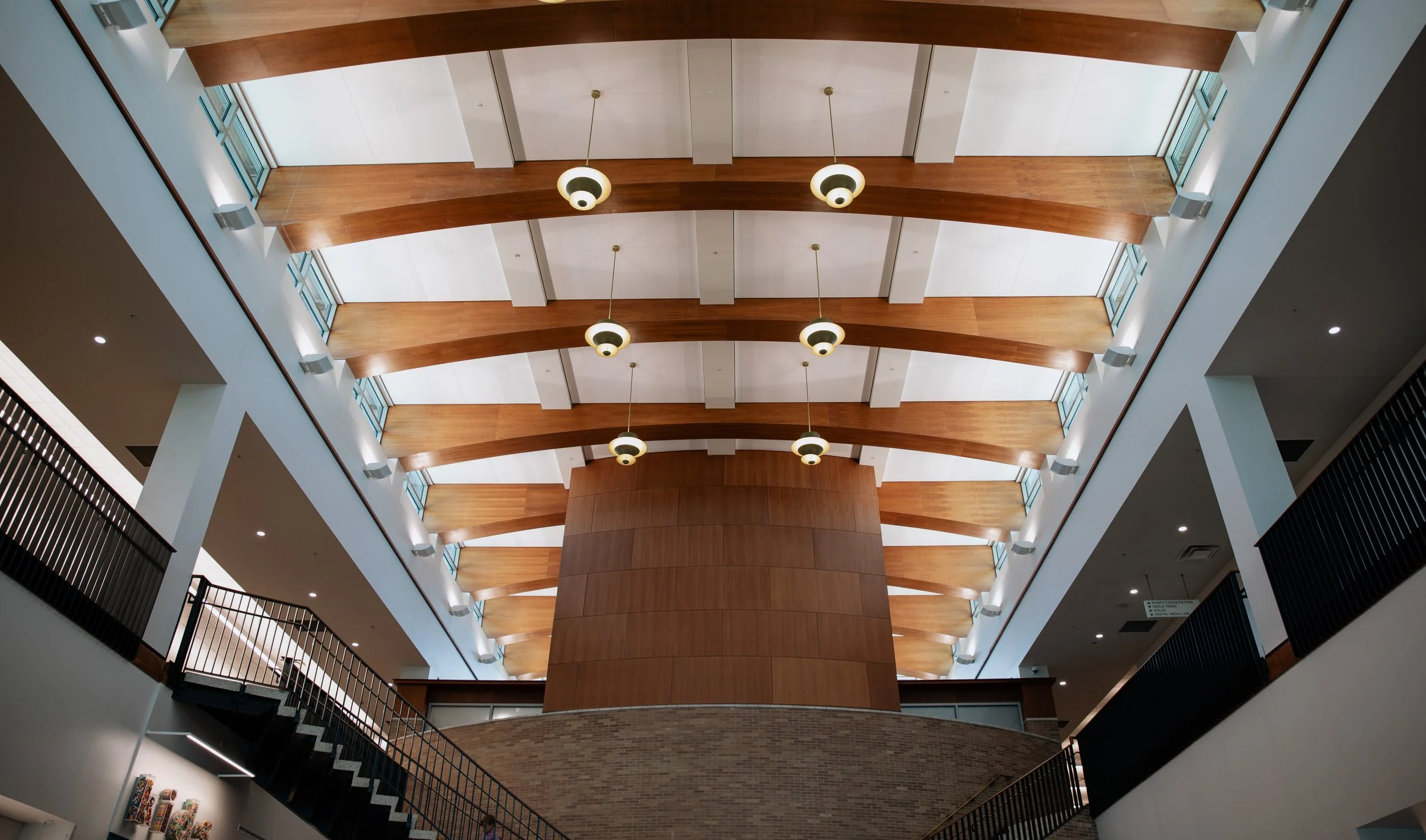
The building itself is a destination. At 132,000 square feet across two stories, Carmel Clay is one of the most impressive public library facilities in the state. It was constructed between 1997 and 1999, and a major expansion and renovation completed in 2022 brought it fully into the modern era without losing any of its warmth. The renovation added a Digital Media Lab with 3D printing capabilities, updated meeting and study rooms, and refreshed dedicated spaces for Youth Services and Teen Services. It also added Java House, a coffee shop inside the library that opens before official library hours, which tells you everything you need to know about how thoughtfully this place is designed. Someone sat down and thought: what does a mother, a student, a remote worker, a reader actually need? And then they built it.
The library serves over 100,000 residents across Hamilton County and ranks among the top ten most-visited library systems in Indiana by annual visits, welcoming more than 580,000 in-person visitors each year. It holds over 233,000 print volumes and more than 40,000 ebooks, with a total collection of 348,000 items. Children's materials make up nearly half of all checkouts annually. That number stopped me when I read it. Almost half. Which means families are here, consistently, choosing books for their children, and that is a community worth being a part of.
My Favorite Spaces Inside Carmel Clay
Every library has a personality, and Carmel Clay's is generous and quietly confident. Here are the spaces that drew me in on this visit.
The reading chairs along the north wall on the main floor are placed in front of floor-to-ceiling windows that look out over Main Street, and sitting in one of those chairs with a book and whatever is left of your coffee is the closest thing to a perfect afternoon I can describe. Natural light pours in. You can watch people walk by on the sidewalk outside. You feel connected to the world and completely separate from it at the same time, which is exactly what reading does.
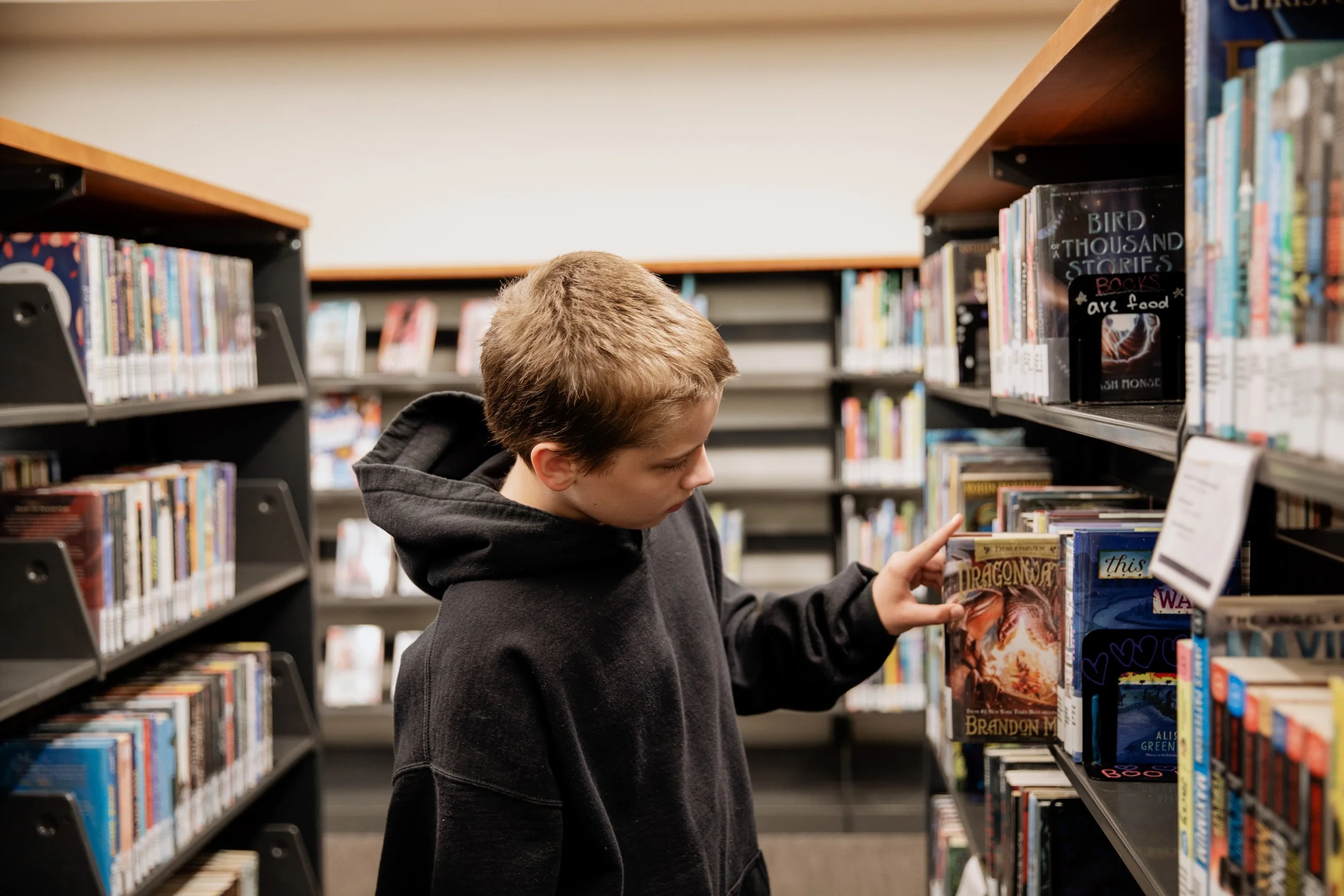
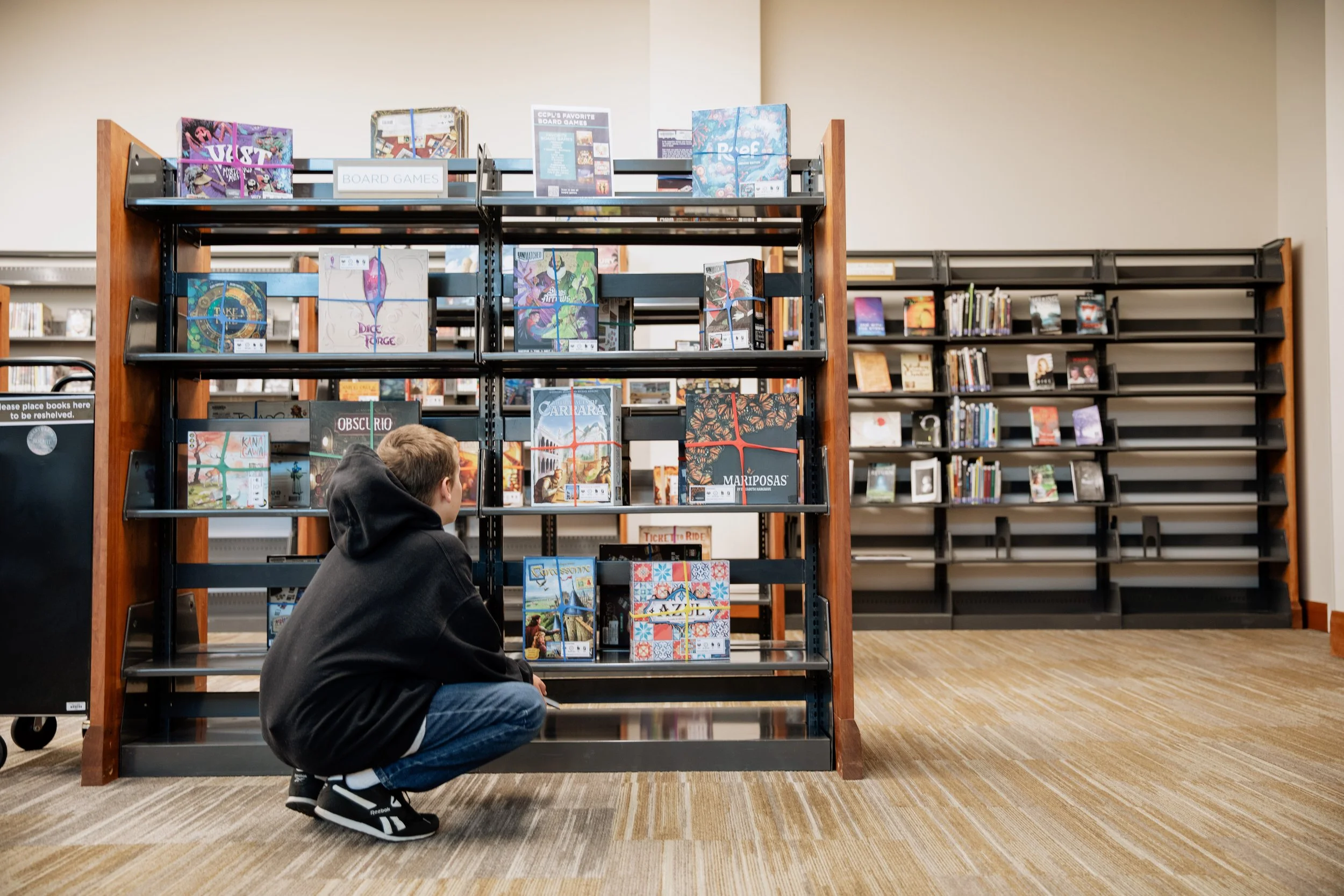
The Youth Services section is designed with genuine intention. It is not just a room full of small shelves. It is a space that communicates to a child that this place is for them, that their curiosity matters, that there are entire worlds here waiting. I have watched both of my kids at different ages gravitate to different corners of that section, and I have never once had to convince them to stay longer. The space does that on its own.
The Teen Zone gives teenagers the one thing they need most in public spaces, which is ownership. It feels like their territory, not a space adults designed and then handed over. Cohen has always been comfortable in library teen sections in a way he is not always comfortable in adult-curated spaces, and I think that matters more than we give it credit for. A teenager who feels welcome in a library is a teenager who will keep coming back long after you stop asking them to.
And then there is the Java House. I know a coffee shop is not technically a library space, but in this context it absolutely is. The ability to get there before the building opens, settle in with something warm, and have 30 minutes of quiet before the day fully begins is a gift. It is the reason I arrived a little early and sat with my book before Cohen got there, and it is the reason I will be back.
What I Picked Up This Week: Joan Didion and the Stories We Tell
I came back to Joan Didion's The Year of Magical Thinking on this visit, and I want to be honest with you: it is not a comfortable book. It is one of those books that tells you the truth so plainly, in such clean and unflinching sentences, that you have to put it down sometimes and just sit with what she said. Didion wrote it after the sudden death of her husband, John Gregory Dunne, and it is one of the most precise and devastating meditations on grief ever committed to paper.
I know that sounds heavy for a library outing with your teenager. But here is what I want to say about it in the context of this series and in the context of what I believe about raising readers: the books that are most worth sitting with are often the ones that cost you something emotionally. The ones that ask something of you. And Didion asks a great deal.
She writes: "We tell ourselves stories in order to live." That sentence has been with me all week. I have been turning it over in the context of motherhood, in the context of what we are actually doing when we bring our children to a place full of other people's stories. We are not simply teaching them to read. We are teaching them to build an interior life. We are teaching them that language is how human beings make sense of what happens to them, that a story is not entertainment but survival, that the act of reading someone else's honest account of their experience is one of the most empathetic things a person can choose to do with their time.
That is what the library gives us. Not a distraction. Not an enrichment activity. A way of understanding this one strange, irreplaceable life we are all trying to figure out. And it is free on Tuesday morning if you want it.
What It Actually Costs to Raise a Reader
Nothing. That is the answer, and I want to say it plainly because I think sometimes we overcomplicate the things that are actually simple.
A library card is free. The books are free. The programs are free. The WiFi is free. The chairs and the quiet and the 45 minutes of your Tuesday that you choose to spend somewhere other than scrolling are free. The conversations that happen in the car on the way home, about what you each picked out and what you think it means, are free. The habit of choosing books is free to build and extraordinarily expensive to lose once it is gone.
I am not a perfect mother. I have not done everything right. But I did this one thing consistently, and it is the thing I am most confident shaped both of my kids in ways that no paid program could replicate. I brought them to libraries. I let them wander. I modeled the act of choosing a book for myself, of taking it seriously, of sitting quietly with someone else's words. And they watched. And then, eventually, without me asking, they did it too.
If you are a mother reading this who has not made the library a weekly ritual yet, I want to encourage you today with as much sincerity as I can offer through a screen: start this week. Not next month. Not when your schedule clears. This week. You do not need a plan. You do not need to prepare or research or have a list. Just go. Walk in. Let your kids choose whatever they want. Sit down in a chair and pick something up yourself. That is the whole practice. That is all it takes to begin.
The Surrounding Area: Carmel is Worth the Trip
Because so much of this series is about the full experience of a library outing, not just the building itself, I want to mention what Carmel Clay's surrounding neighborhood offers a family or a solo visitor who wants to make a day of it.
The Carmel Arts and Design District begins just a few blocks west on Main Street and is genuinely one of the most pleasant walking districts in Central Indiana. Life-size sculptures line the sidewalks. Galleries sit alongside boutiques and restaurants. If you have never strolled that stretch of Main Street on a weekday morning when it is not too crowded, put it on your list. The energy is creative and unhurried in a way that pairs well with a library visit.
Bub's Burgers is nearby for lunch if you are hungry and want something reliably good. Muldoon's and Bazbeaux offer patio dining when the weather cooperates. If you are visiting on a Saturday, the Carmel Farmers Market draws more than 70 vendors and is worth timing your visit around. And the Monon Trail is accessible from downtown if you want to walk or bike before or after your library time. Carmel is an easy, generous city to spend a few hours in, and the library sits right in the middle of it all.
This Week's Quote and Why It Stayed
"We tell ourselves stories in order to live." — Joan Didion
I keep returning to this line not because it is surprising, but because it is true in a way that keeps revealing new layers the longer I sit with it. As mothers, we are storytellers constantly. We tell our children stories about who they are and what they are capable of. We tell ourselves stories about the kind of parent we want to be. We tell our families stories about what matters and what is worth protecting. The library is where we go to be reminded that we are not telling these stories alone, that every generation before us has done this exact thing, putting words around the human experience in the hope that someone else will pick them up and feel a little less alone.
That is what a library is at its most essential. Not a building. Not a collection. A conversation across time between people who chose to be honest about what it means to be alive. Taking my kids there every week was my way of inviting them into that conversation early. I would do it again a thousand times.
Next week, a new library. Same ritual.
